A shared frame
The anonymous metch collective.
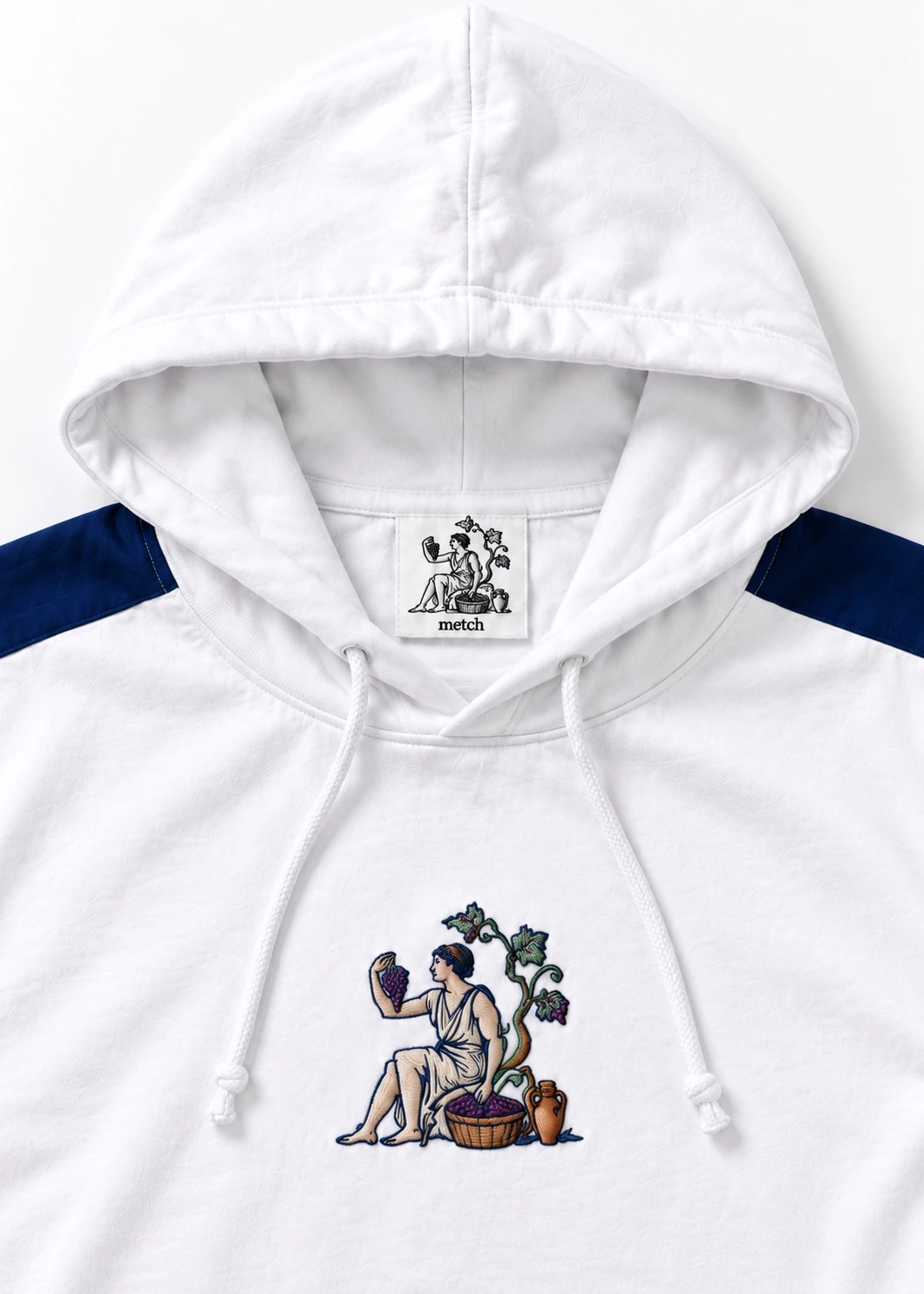
The shoulder panels guide the eye towards a familiar image, then continue with the movement of the sleeves.
An image with space
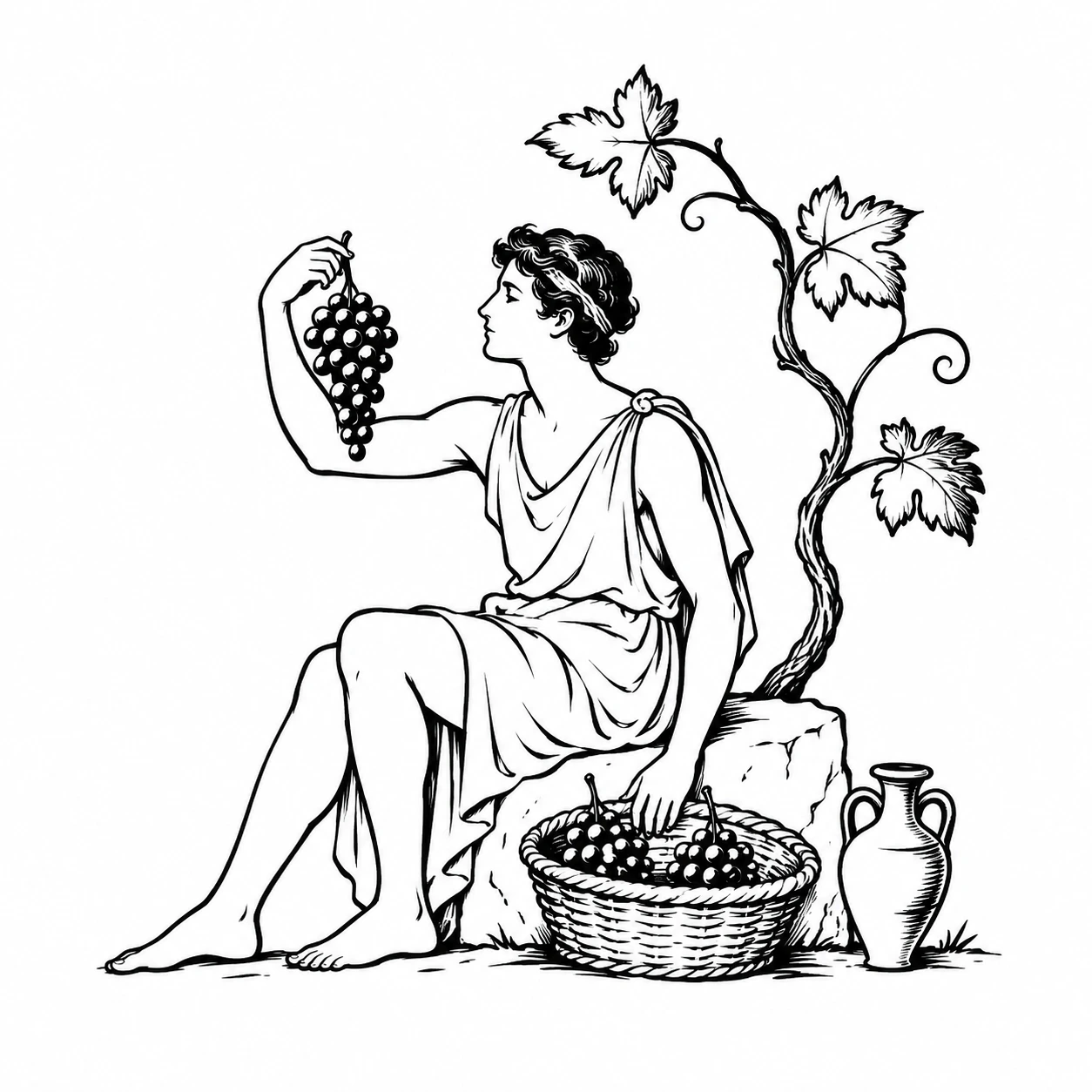
The harvest scene has become one of the ways the metch pieces recognise one another. It has a seated figure, grapes and a vessel, but its place in a garment changes the way those details are encountered. Here, the image sits at the chest within a large white field. We want the first impression to begin with that relationship between a small, particular scene and the room around it. The illustration has a place to be noticed. The rest of the hoodie remains present as a shape, rather than disappearing behind the mark.
We think of belonging as something that can be expressed through relationships inside a design. The harvest image connects this piece to the wider collection, while the white and dark navy give it an identity of its own. Recognition does not have to mean repetition without change. An image can move between garments and take on another tone through its scale, position and surrounding colour. This hoodie approaches that possibility through contrast. The familiar mark stays at the centre, but the arrangement around it invites a different first encounter.
Following the navy
The navy begins at the shoulders and continues along the outer sleeves. It creates a line the eye can follow away from the chest and into the way the garment is worn. From the front, the panels frame the white. Seen at an angle, they become a stronger part of the silhouette. We like that shift in emphasis. A piece can feel connected across its different views without presenting exactly the same balance from each one. The contrast becomes part of its movement, rather than remaining a detail that belongs only to the flat photograph.
The hood, drawstrings and kangaroo pocket introduce familiar structures within that arrangement. Their presence gives the graphic elements an everyday setting. The harvest image does not need to explain the hood, and the panels do not need to turn every part of the piece into a statement. Each has a role in the whole. We look at the relationship between the white front, the dark sleeves and the space around the illustration. That is where the piece finds its particular rhythm: a clear image held within a shape that can change as the wearer moves.
A second introduction
On the upper back, beneath the hood, a small navy signature offers another point of recognition. It has a different character from the harvest scene at the front. The chest image asks you to look into a small world; the signature is a quicker gesture, something that can be noticed as a person turns away. We want those two encounters to belong to the same garment without competing to say the same thing. The reverse gives the white and navy another balance, and the small mark has enough room to keep its own voice.
The collective's anonymity leaves that voice with the piece itself. You do not have to know an artist's public identity before deciding whether the contrast, the illustration or the small signature feels close to you. A garment can gather meaning through an ordinary day, an outfit you keep returning to or a journey that becomes associated with wearing it. Those events cannot be assigned in advance. We offer a shared frame and a familiar image. The particular place they take in your life is what allows the design to become personal beyond the first photograph.