A question kept close
The anonymous metch collective.
The same word changes when its audience changes. Here, the question belongs first to the person wearing it.
Changing the audience
A word on the chest meets the outside world. A word on underwear has a different first audience. We find that difference interesting because it changes the meaning of the design without requiring a new sentence. Say? already has a place in the metch language. On this piece, the question becomes more private. It can be playful, self-directed or something you choose to share. The garment gives the person wearing it control over the conversation. We want that sense of choice to remain part of its character, rather than writing an explanation that decides in advance what intimacy ought to mean.
There is a private side to travelling that rarely appears in the account you give afterwards. The things packed carefully, the objects kept close, the small choices that make an unfamiliar room feel like your own. We draw on that feeling across this design. A private piece can be a way of keeping hold of yourself while everything around you changes. It does not have to become a photograph, a story told at dinner or evidence that you went somewhere. Its importance can stay with the person who chose it. That is enough for a design to have a real place in someone's life.
A small composition
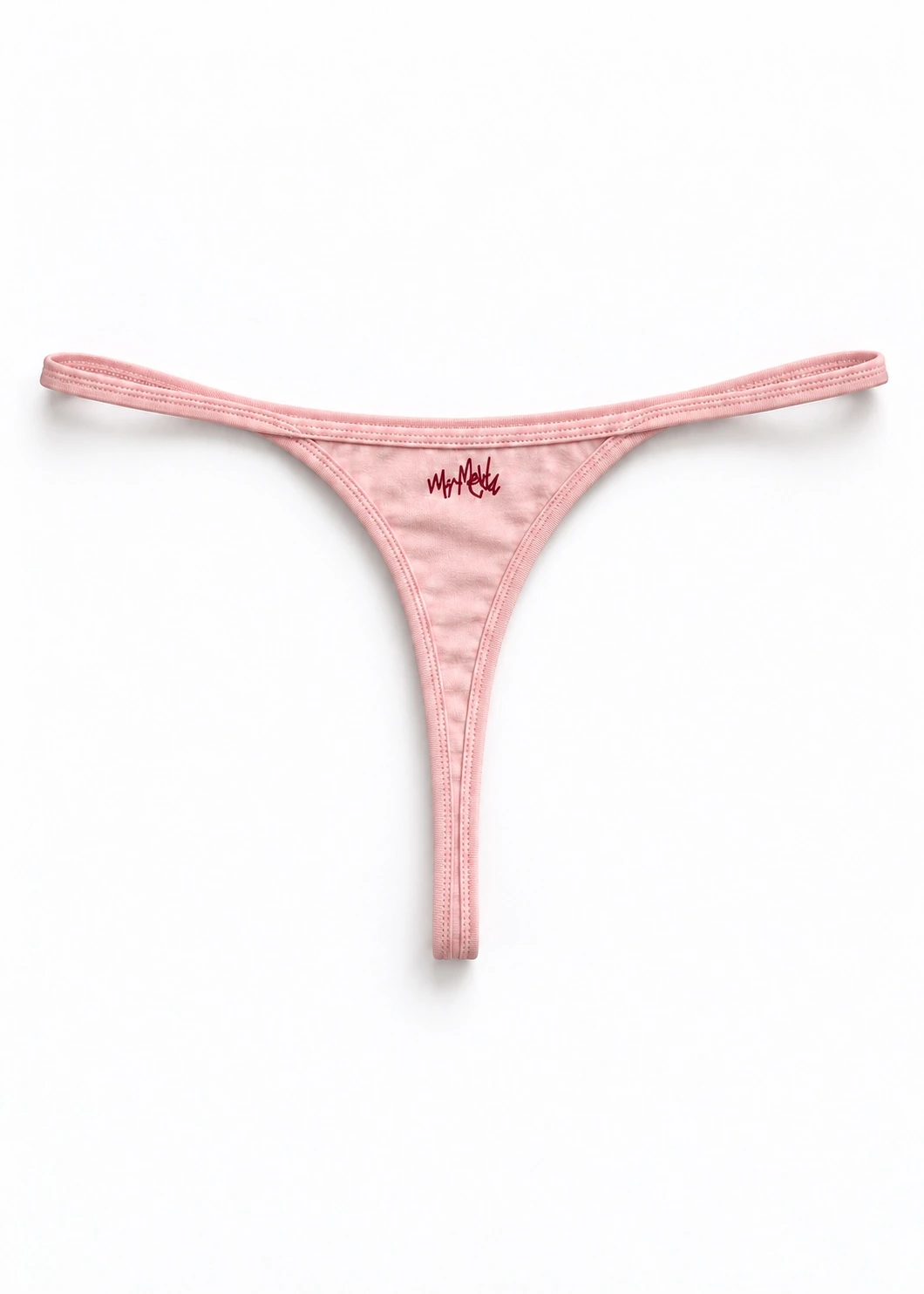
Working within a small shape asks for a different kind of attention. The artwork, the bow and the slim sides all become significant because there is less surrounding surface to absorb them. The blush pink gives the piece a common ground. Burgundy brings the word into focus without breaking the relationship between the colours. The bow adds a familiar gesture, but the lettering keeps it from becoming the whole personality of the garment. We are interested in how these elements hold one another in balance. The piece should have a complete character when seen closely, rather than relying on a large presentation around it.
The reverse carries a small metch mark. That second signature makes the design feel considered from both sides. It is a detail a person can know about even when it is outside anyone else's view. We like that distinction. A design can have meaning because you know it is there. The narrow lines and the small field of colour make that knowledge feel personal. The front does not have to tell the entire story, and the reverse does not have to repeat it at another scale. Each part has its own way of belonging to the same piece.
Keeping something yours
The questions we bring to this design concern scale, tone and the amount of expression a small object can carry. How does the word sit beside the bow? How much contrast gives it a voice without making it severe? What remains when all the surrounding presentation is taken away? These are useful ways of looking at the finished garment because they bring attention back to what is actually there. A story should deepen that attention. It should help you notice the relationship between details that might otherwise seem ordinary, and leave space for your own response to them.
This version of Say? belongs to a personal part of the wardrobe. We associate it with the freedom to keep a thought to yourself, to decide who hears it and to change your mind. The question remains open. Our names are absent for a related reason: we would rather the piece build its own relationship with the person who wears it than borrow meaning from the identity of its author. A small design can hold a great deal when it is close to someone. You are allowed to keep that meaning private. Nothing in the garment asks you to explain it.