A mark in the everyday
The anonymous metch collective.
We wanted the harvest mark to become familiar through the pieces you reach for every day.
A smaller stage
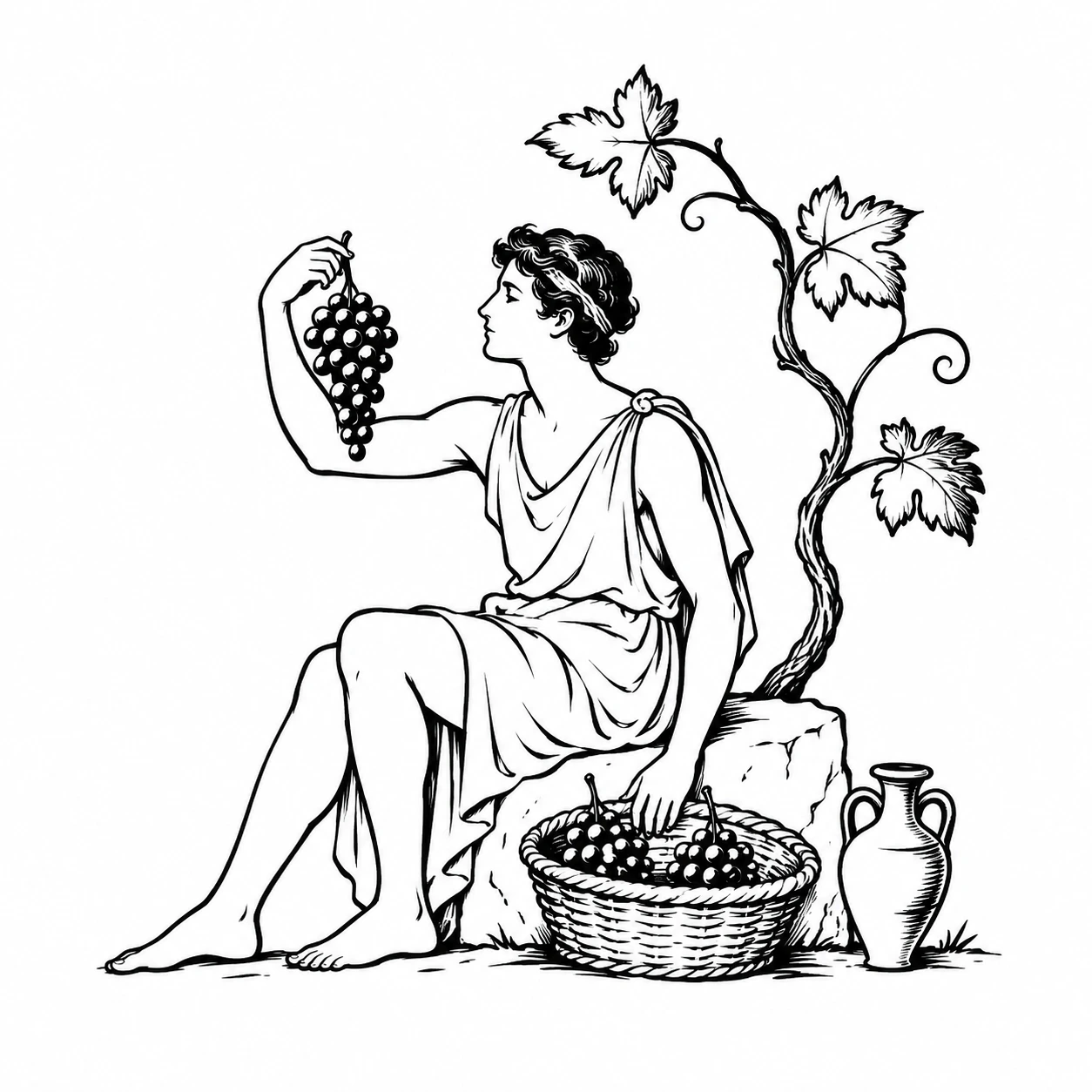
The harvest scene already has several places in the metch collection. At the chest, it meets someone directly. Low on the back, it is discovered from another angle. Inside a label, it belongs first to the wearer. Moving that image onto socks changes its scale again. We are interested in what happens when a familiar mark becomes part of a smaller object, one that may appear only in a brief glimpse. The scene has to retain its character while becoming part of the rhythm of an everyday wardrobe. It gains a different intimacy through that change.
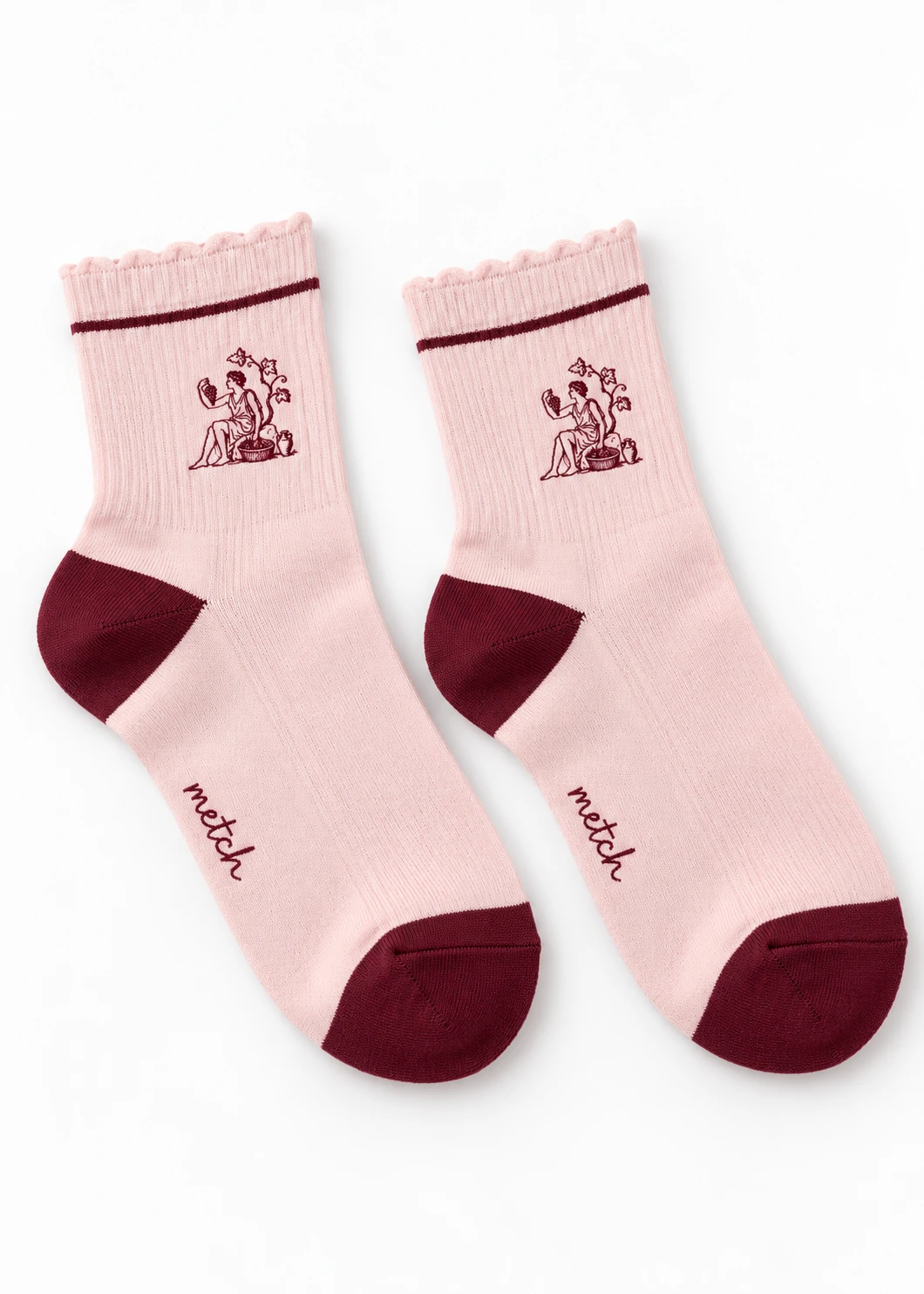
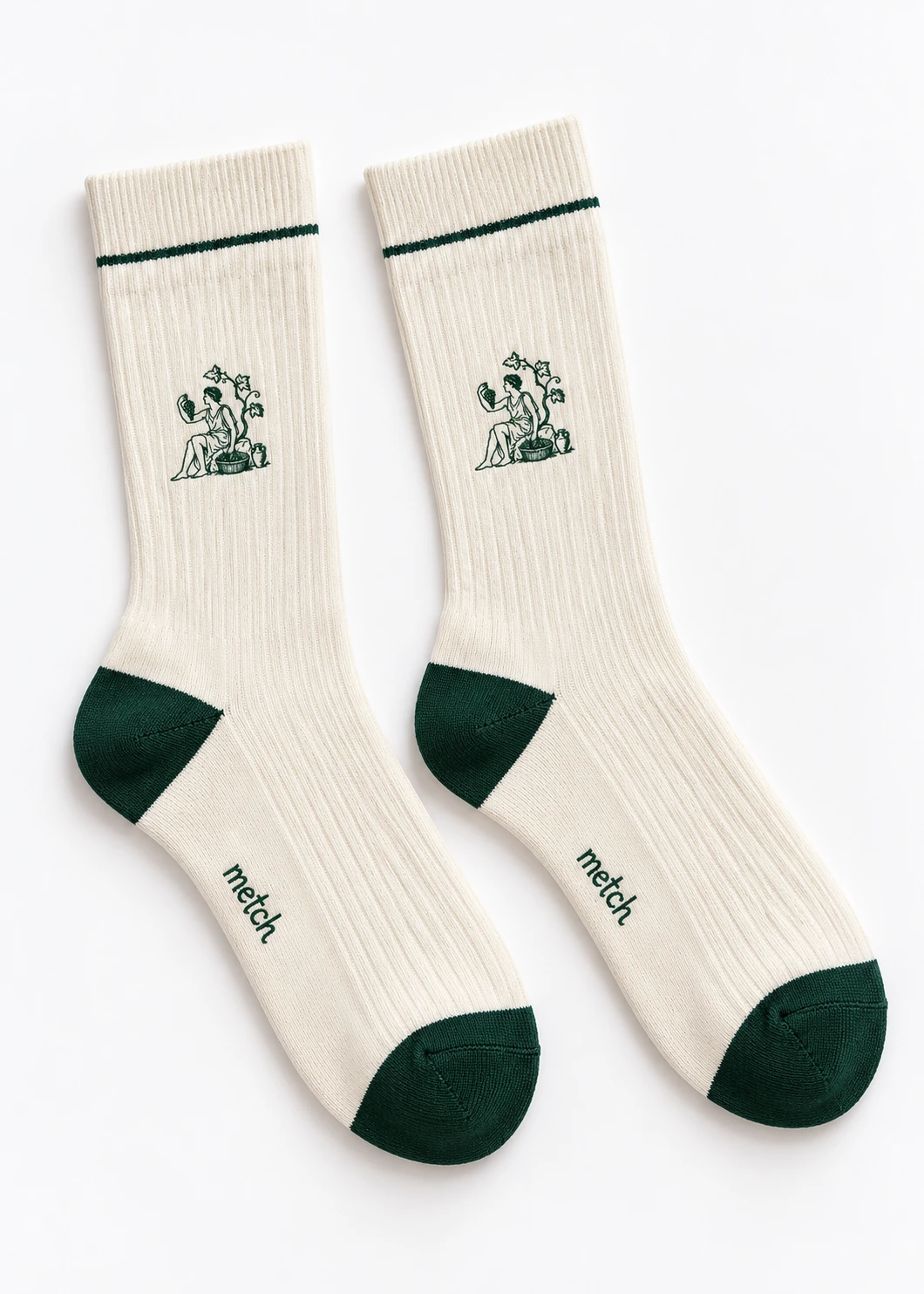
There is something particular about the pieces a person chooses at the beginning of a day. They can feel ordinary and personal at the same time. A colour you keep returning to becomes part of a familiar routine. A small image starts to carry recognition through repetition. We want these socks to offer that kind of relationship with metch. The harvest figure is there to be noticed, but the whole piece also matters: the ribbed leg, the cuff line and the change in colour at the heel and toe. The image belongs inside that complete arrangement.
Three colour rhythms
Ivory and forest green bring a familiar metch relationship into the design. The pale ground gives the green a clear place, from the cuff line to the heel and toe. The emblem participates in the same colour conversation. Navy and ivory change the balance, allowing the lighter details to come forward against a darker leg. Charcoal and ivory offer another version of that relationship, with a quieter ground. We see the three colourways as different rhythms inside one idea. Each carries the same image, while the surrounding colours give it a different first impression.
The narrow line near the cuff has an important role in that rhythm. It gives the upper part a point of recognition before the eye moves towards the harvest scene. The heel and toe establish a larger pattern of contrast below it. Near the foot, the small metch mark becomes another detail that may remain known mainly to the wearer. We like giving those different parts their own degree of presence. A pair can feel complete even when only one section of it is visible. The rest of the design is still there to be discovered.
A familiar ritual
The design questions here concern the relationship between a small graphic and an ordinary object. Can the emblem keep its character at this scale? Does the contrast at the ends belong to the line near the cuff? What makes each colourway feel like a version of the same piece rather than a separate idea? We keep our attention on those relationships because they give an everyday item a particular identity. The image and the surrounding structure need to make sense together. The story begins in the collective's visual language, then finds a smaller place in which to speak.
We want these socks to be met first through their colour and the small world of the harvest figure. There is no need to recognise an artist's name before choosing the pair that feels closest to you. Our collective stays anonymous, and the design can build familiarity through use and association. A journey, a particular outfit or the habit of reaching for one colour can give the piece a personal place. The mark is shared across the collection. The daily rhythm it joins is your own.